
Navigating the Holidays with Neurodiverse Kids Aged 3–5

Written by Taryn – Occupational Therapist, Nurtured Growth Therapy
The holidays are supposed to be magical, right? But if your 3–5-year-old is neurodiverse—whether they’re autistic, have ADHD, sensory processing differences, or are just figuring out their own way of experiencing the world—the festive season can sometimes feel a little… overwhelming.
From noisy family gatherings to disrupted routines and sugar-fuelled excitement, it’s no wonder preschoolers might feel anxious, overstimulated, or simply cranky. At Nurtured Growth Therapy, we know that navigating holidays with neurodiverse kids means honouring their needs, respecting their rhythms, and finding ways to make the season joyful for everyone.
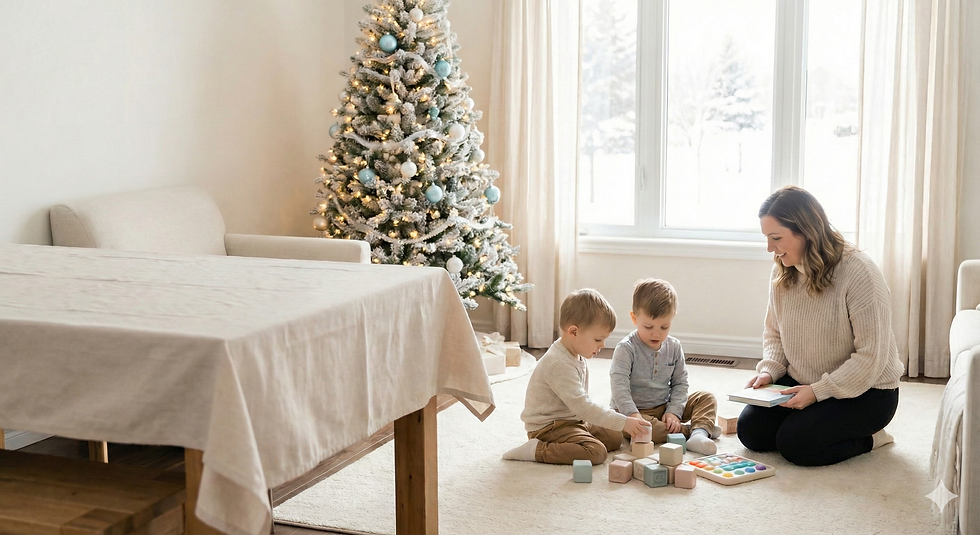
Why navigating Holidays can be hard for neurodiverse Preschoolers?
For children aged 3–5, who thrive on predictability, play, and familiar routines, the holidays often introduce a big leap:
Loud noises, crowds, or bright decorations
Changes in sleep, meals, and daily routines
Meeting new people or visiting unfamiliar places
Pressure to join activities (photos, gifts, social greetings)
Strong sensory input (itchy clothes, flashing lights, smells)
If your child finds this time tricky, you’re not alone. The key is preparation, predictability, and permission to do things differently.
7 OT-Backed Strategies to Help Your Child Enjoy the Holidays
Here are practical, playful ways to help your preschooler feel safe, supported, and successful during festive celebrations:
1. Prepare with Visuals and Stories
Use social stories, picture schedules, or a holiday countdown calendar to show what’s coming. Visual cues give children a sense of control and help reduce anxiety.
2. Stick to Routines Where You Can
Keep core routines—meals, naps, and bedtime—consistent, even if the day’s activities change. Predictability helps children stay regulated and calm.
3. Create a Calm-Down Space
Whether at home or visiting family, set up a quiet corner with toys, headphones, a weighted blanket, or other sensory tools. Let your child know it’s okay to take a break whenever they need it.
4. Practice New Situations Through Play
Role-play opening presents, greeting relatives, or going to a party with dolls or stuffed animals. Practising expectations in a safe, playful way helps children feel prepared.
5. Pack a Sensory Toolkit
Take along fidget toys, noise-reducing headphones, chewy necklaces, or calming snacks when going out. These small supports can make a big difference for regulation and comfort.
6. Follow Your Child’s Lead
It’s okay if they don’t want to sit on Santa’s lap, wear a costume, or open presents in front of everyone. Respecting your child’s comfort and autonomy reduces stress.
7. Include Movement and Regulation Time
Balance structured activities with time to run, jump, swing, or climb. Gross motor play supports emotional regulation and sensory integration.
How an OT Can Help During the Holidays
Occupational therapists can support families of preschoolers by:
Creating sensory strategies to prevent overstimulation or meltdowns
Developing visual supports and calming routines
Strengthening emotional regulation through play
Coaching caregivers on supportive, respectful responses
Adapting holiday traditions to suit your child’s needs
Our role is to reduce stress, not add to it, so your family can enjoy the holidays in ways that work for you.
A Gentle Reminder
There’s no single way to do the holidays “right.”
If your family celebrates with quiet routines, play-based activities, and low-key joy—you’re doing beautifully. And if the day ends with a meltdown or skipped meal, that’s okay too. What matters is that your child feels safe, accepted, and loved.


